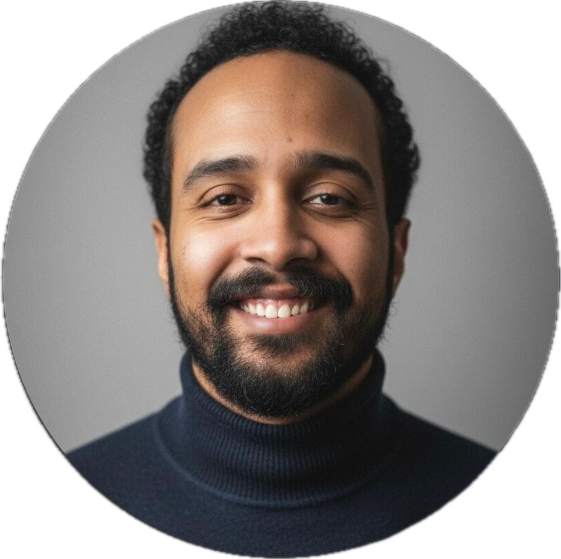
Designer.
Systems thinker.
Human-science lens.
I started by studying how people form meaning together — in communities, across cultures, through rituals and routines. Then I went to work on digital products. It turns out the questions are identical.
Presence-first design
Most products start with a screen and ask, what should the interface do? I start with a person and ask, what should they experience? — then design the conditions for that state to emerge. The interface becomes secondary. The experience becomes primary.
Traditional products begin with screens, features, and workflows. My work begins with a desired human state. Instead of "what should the interface do?", the question is "what should the person experience?" — and that single shift demotes the interface and promotes the experience.
This shows up differently across projects. ProteGO designs conditions for confidence — guidance that meets people at their readiness level instead of pushing them toward a conversion. JAY designs conditions for wonder — environments that respond to presence without demanding performance. Press-Sense designs conditions for creativity — an attentive room where ideas emerge through exploration, not extraction.
The through-line: technology should adapt to human experience, not the other way around.
What this means in practice
- I design for states, not screens. Every design decision starts with: what does the person need to feel — capable, safe, clear, curious — and works backward to the interface.
- I refuse the engagement playbook. Streaks, guilt mechanics, compulsive loops, dark patterns — these are design choices, not inevitable features. I name them and cut them.
- I treat ethics as a design constraint, not a disclaimer. Privacy architecture, consent patterns, and anti-manipulation defaults are built into the structure, not bolted on.
- I use anthropology as a research method. Not surveys alone — behavioral observation, thick description, situational framing. I want to understand not just what people do, but why the doing makes sense to them.
The longer story
My time studying applied anthropology trained me to observe, to hold multiple frames simultaneously, and to resist the temptation of the obvious interpretation. That lens has shaped every product I've worked on since.
My path into design came through years of working directly with people — massage and holistic therapies, personal training, yoga instruction, somatic movement, facilitation and community work. I was already designing experiences before I knew it was called that. Starting in 2022, I studied applied anthropology at PUCE until a near-fatal accident cut my studies short before I could finish the degree, while training at Ironhack (UX/UI) and Avocademy, then built a freelance design practice under PereX — working with early-stage startups, academic researchers, and technology teams.
Over the past two years I've built deep AI-native fluency: not as an engineer, but as an operator and designer. I build with Claude Code daily — this portfolio itself was designed and assembled through that practice. I design conversational and voice AI products. I think about agent governance, human-in-the-loop oversight, and AI ethics as product problems, not policy problems.
I live with ADHD — which has made me a far more empathetic designer for anyone who processes information differently, and which I've turned into product thinking through projects like Edge and EOS.
I speak four languages: English (native), Spanish (native), Italian (working), Portuguese (working). I'm a US citizen who splits time between New York and Barcelona — available remotely from either location, open to US and EU opportunities. I think in systems, design for journeys, and keep humans visible in every decision.
How this portfolio was built
This portfolio was built using Claude Code, an agentic CLI for software development. I wrote every design decision, case study narrative, and prototype concept. Claude Code handled code generation and iteration. That distinction matters to me: I believe AI should amplify human judgment, not replace it — and this portfolio is the product of that belief in practice.
What I do when I'm not working
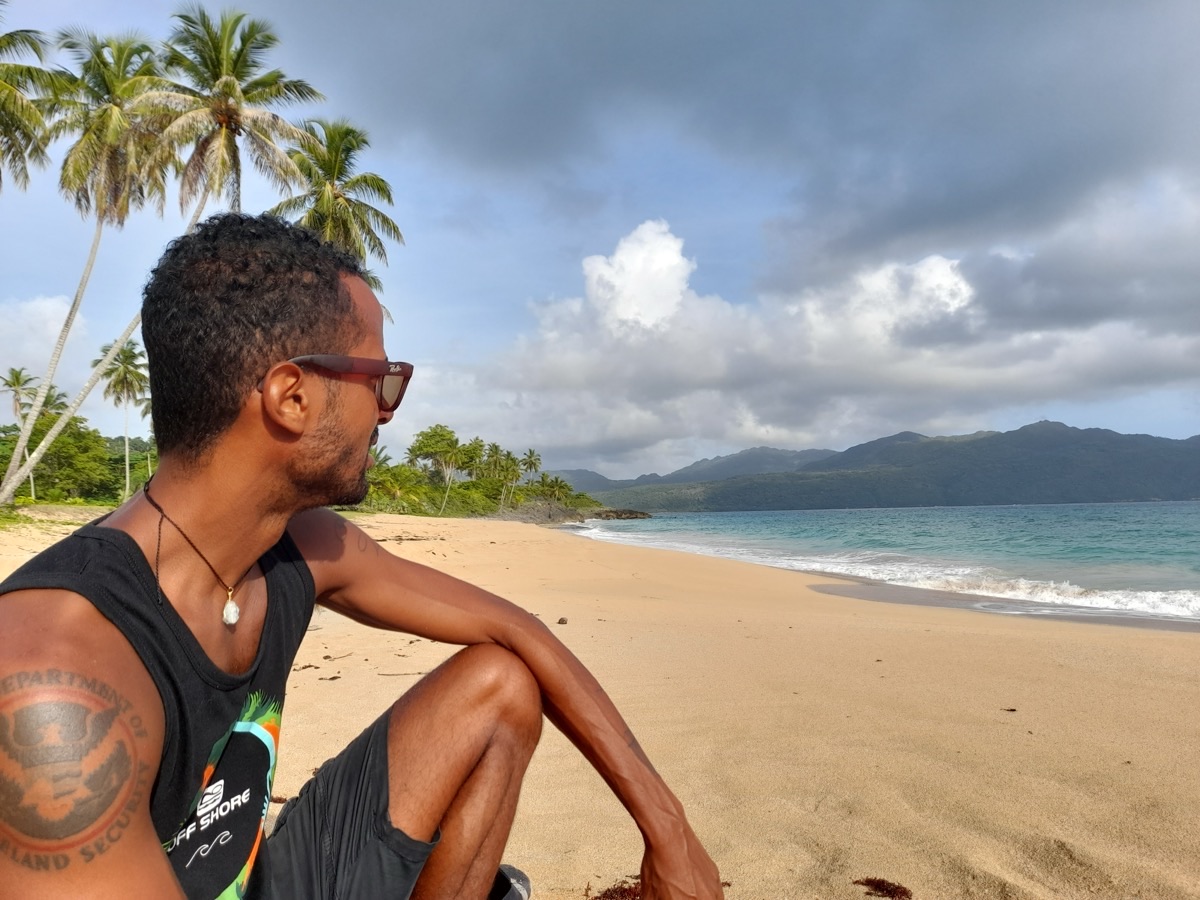
If you can't find me online, I am probably traveling and getting immersed in other cultures, both to learn about them and to feed my adventurous spirit.
I have a passion for scuba diving, hiking, Acro Yoga, dancing, Longboarding, capoeira, Fitness, and Obstacle races just to name a few.
I survived a serious accident while living abroad — an experience that reset my relationship with risk, time, and what I actually want to build.
What I'm working on
I'm in an active job search and open to the right opportunity — particularly in AI-native UX, product design, or research roles where the intersection of human experience and AI systems is the actual job, not a side concern.
Alongside job searching: co-designing NuvAI (a voice agent for real estate qualification), developing Solace (a circadian health product built around natural light), and running the Voice Agent Behavior Lab as an active research instrument feeding directly into the NuvAI design process.
The kind of work I'm drawn to: teams building things that are genuinely useful to people at moments that matter, where ethics and craft are both taken seriously.